Have you ever watched a brilliant leader do something baffling under pressure? The calm strategist who suddenly micromanages. The warm team builder who goes icy in one particular meeting. The decisive executive who can’t make one specific call.
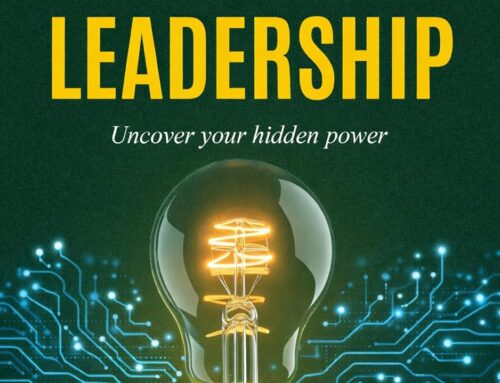
In Schemas in Leadership I call this the hidden architecture of leadership. Underneath the visible behaviour sits a schema: a recurring life theme, learned early, that predicts what will happen and how safe it is to be yourself. Schemas aren’t flaws. They were intelligent adaptations once. The trouble is that they keep running long after the situation that created them has gone.
How schemas show up at work
When a schema is triggered, we flip into a mode, a quick change of state. We might feel suddenly small and overwhelmed. We might cope by detaching, giving in, or overcompensating and bulldozing. Or an inner critic might take over with a punishing or demanding voice. The goal isn’t to never flip. It is to notice the flip and find our way back to the healthy adult: balanced, boundaried and practical.
Five questions to find the pattern running you
- Where do I react more strongly than the situation deserves? Disproportion is the fingerprint of a schema.
- What is the story I tell myself in that moment? “They don’t respect me.” “If I don’t fix this, it will all fall apart.” “I’ll be found out.”
- What do I do next, almost automatically? Take over, withdraw, please, attack, over-prepare?
- What did that strategy protect me from, once? This is where compassion comes in, and compassion is what makes change possible.
- What would my healthy adult do instead? Keep it small and specific: one sentence, one action.
Try this: keep a trigger diary for one week. Each time you react strongly, write down the event, what you felt, what you thought, what you did, and what your healthy adult would have done. Patterns appear faster than you expect.
Why this matters for teams and culture
Leaders’ schemas don’t stay private. A leader with unrelenting standards can create a team that is afraid to ship. A leader who fears rejection can create a team that never disagrees. When leaders learn to see their own patterns, their teams get more honest, more creative and much less tired.
If this resonates, the book goes much deeper, with the schemas most often seen in leadership, the needs underneath them and practical ways to change the pattern. You can also read my earlier piece, Name, Honor, Choose, Rehearse, on how leaders actually change a pattern.
Get Schemas in Leadership on Amazon, or explore Schemas in Leadership programs for your organization.